Bible Study Methods

What is the Bible?
Old Testament

TaNaKh

The collection of texts known as the Old Testament is called the "Tanakh" in Hebrew. This Hebrew term is an acronym derived from the three primary pillars of its tripartite structure: the Torah (the Law), the Nebi'im (the Prophets), and the Ketubim (the Writings). Rather than presenting a uniform narrative, this structural organization categorizes the texts by their functional, theological, and literary genres. This traditional three-tiered framework reflects both the historical canonization process and the theological priorities of ancient Israelite scholarship.

This ancient threefold division is not merely a modern analytical tool but is deeply rooted in historical antiquity, as evidenced by early first-century texts. A prominent example of this conceptualization appears in the book of Luke 24:44 (ESV), where Jesus states, “These are my words that I spoke to you while I was still with you, that everything written about me in the Law of Moses and the Prophets and the Psalms must be fulfilled.” In this context, "the Psalms"—the premier and longest book of the third section—serves as a synecdoche representing the entire Ketubim (Writings). This textual evidence demonstrates that early biblical communities operated under a well-established understanding of this specific canonical framework.
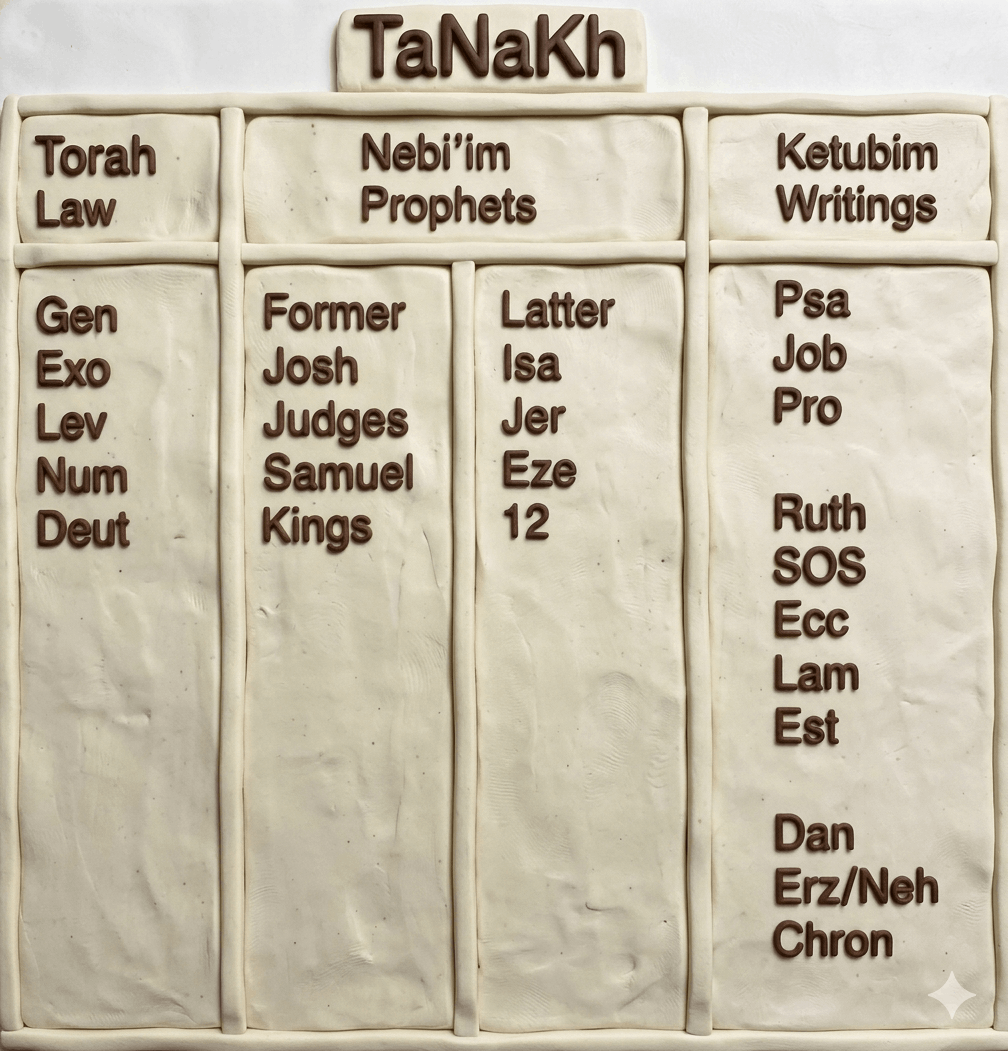
TanaKH

Arangement

When evaluating the chronological construction of the Old Testament, it becomes evident that the Old Testament Canon is not arranged in a strict linear timeline of historical events. Instead, the sequence of the books aligns primarily with the thematic, content-driven, and genre-specific distinctions established by the original Tanakh. Over time, as these texts were translated into Western languages, the structural organization underwent significant adaptations. Modern Western translations expanded the foundational category of the 'Law' into a broader suite of 'Historical Books' to emphasize a linear historical progression. Concurrently, the expansive and diverse category of the 'Writings' was condensed and re-contextualized into what is now commonly designated as 'Wisdom Literature.'
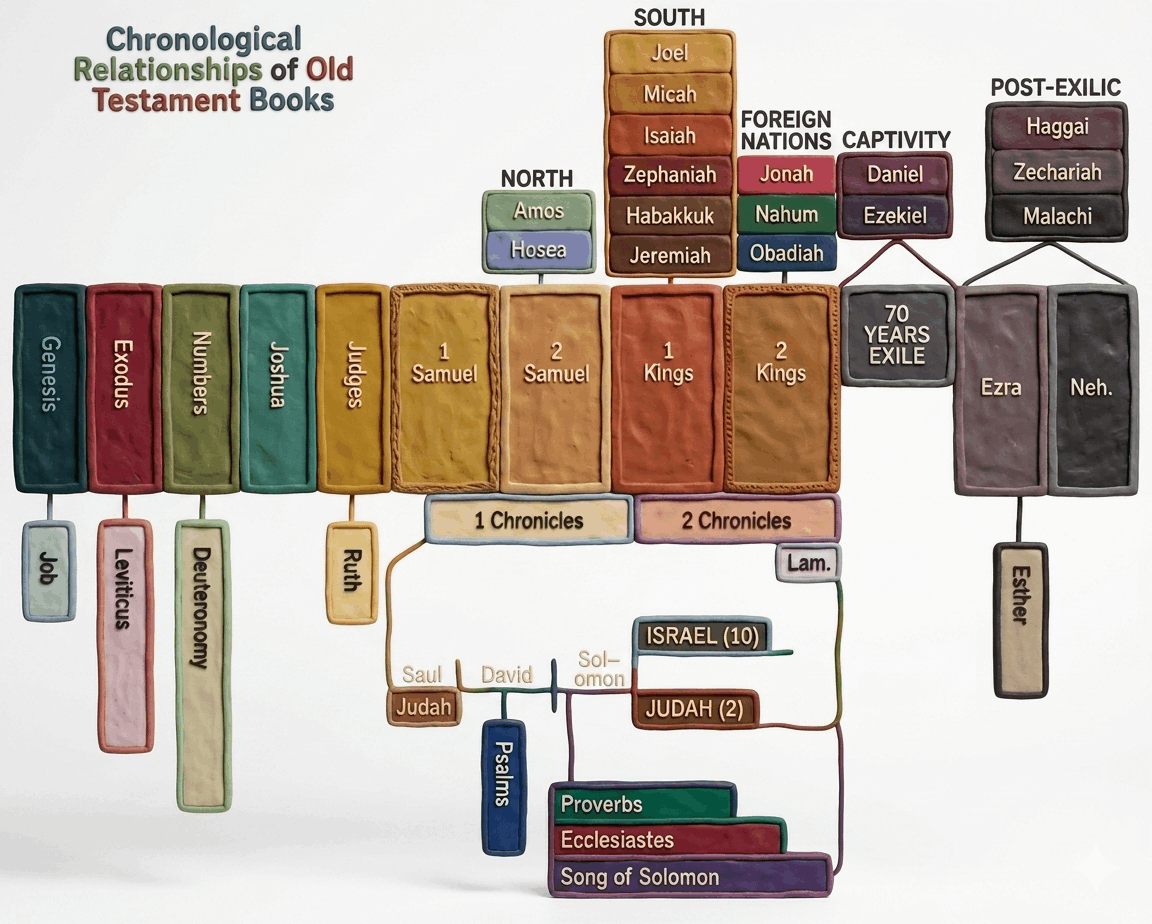
chronological

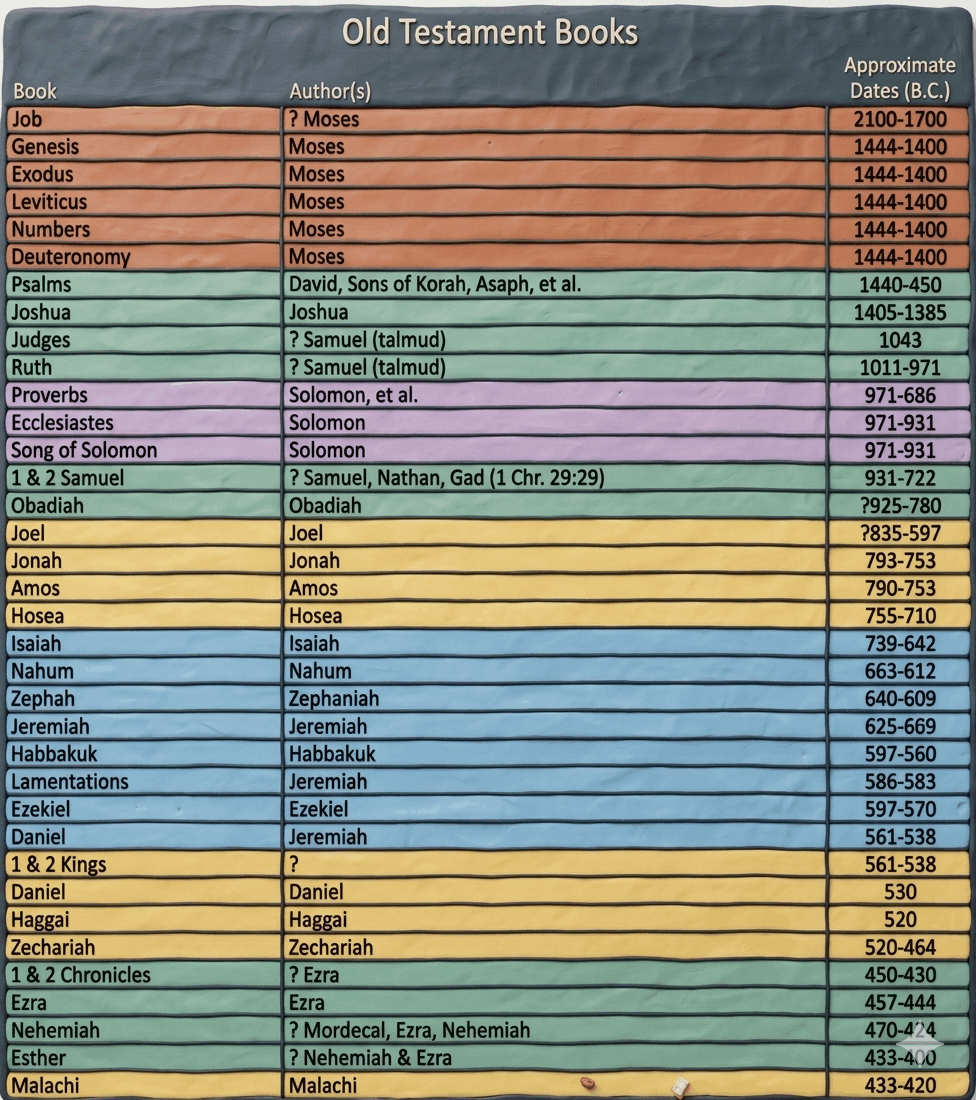
Arrangement, Timeline, & Authorship

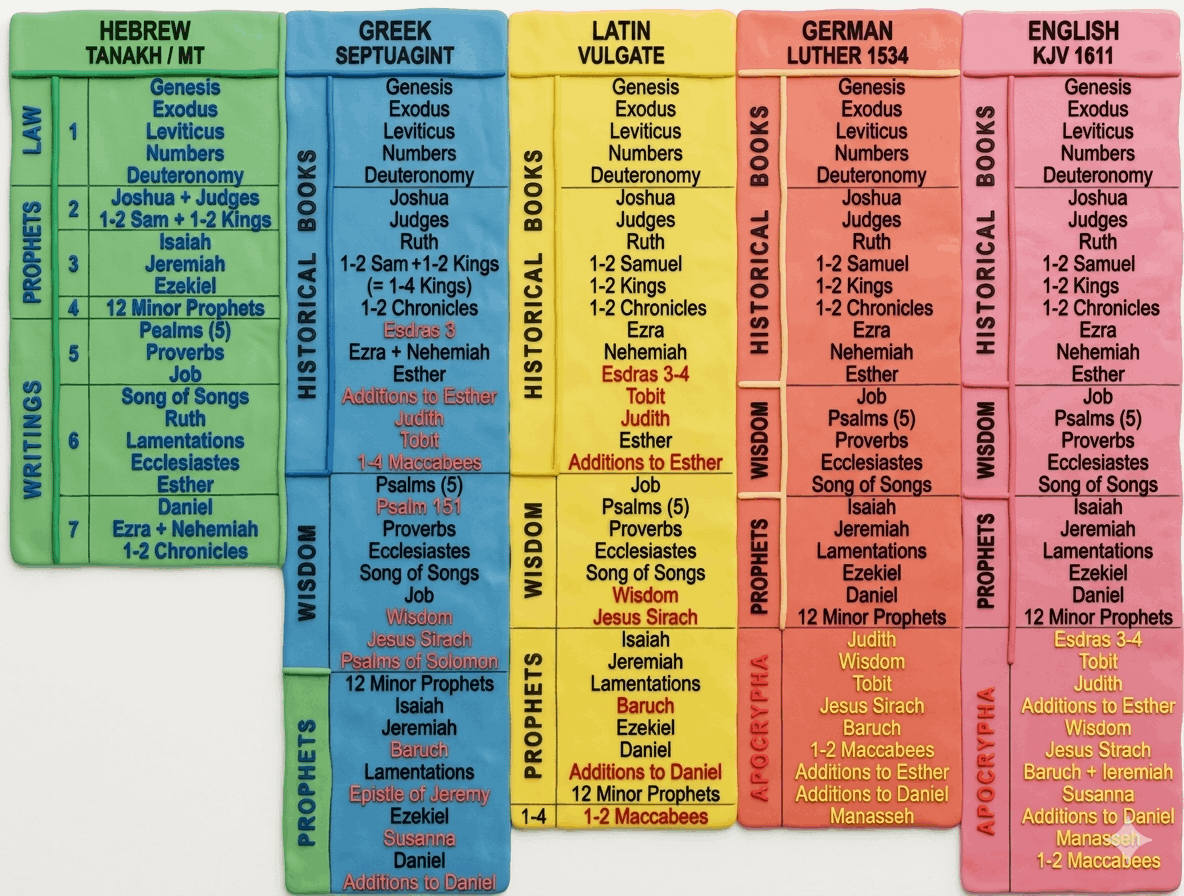
The structural divergence across historical biblical canons is not merely a matter of mechanical layout; rather, it reflects shifting theological priorities, historical narratives, language, and cultural adaptations. The Hebrew Bible, or Tanakh, utilizes a tripartite arrangement: the Torah (Law), the Nebi'im (Prophets), and the Ketubim (Writings). 

The Hellenistic Jewish translators of the Greek Septuagint (LXX) abandoned this framework for a topical and broadly chronological approach, dividing books into Law, History, Poetry/Wisdom, and Prophecy.

This Greek model directly influenced St. Jerome’s 4th-century Latin Vulgate, which stabilized this four-part categorical division for western Christendom while explicitly incorporating the Apocrypha throughout its historical and prophetic sections.

During the Reformation, Martin Luther fundamentally reshaped this structure in his 1534 German Translation. While maintaining the Vulgate’s topical flow, Luther isolated the Apocrypha texts, interposing them between the Old and New Testaments; demoting them to books that may be "profitable to read" but not equal to Scripture.

The 1611 English King James Version (KJV) inherited this Protestant layout, cementing a structure that ends the Old Testament with the Minor Prophets.

arrangements

Textual Updating

Subsequent biblical editors and scribes, most notably figures such as Ezra the Priest, are widely believed to have integrated contextual clarifications into the Biblical text, such as modernizing archaic place names to ensure contemporary readability. This scribal practice is formally recognized as Textual Updating. Proponents of this framework argue that these editorial revisions were not arbitrary human interventions; rather, they were orchestrated under the sovereign guidance and provision of the Holy Spirit. Conversely, dissenting scholars interpret these specific passages as genuine instances of predictive prophecy, viewing the Textual Updating hypothesis as a problematic compromise that potentially undermines textual premonition

Scriptural Evidence of Potential Textual Updating

Several prominent passages within the Torah serve as primary case studies for the Textual Updating paradigm:

Posthumous Narrative Additions: The account of Moses’ death and its aftermath, meticulously documented in Deuteronomy 34:1-12, functions as a primary example, as a author cannot naturally record their own demise, through Moses may have recorded it prophetically.

Geographical Modernization: The deliberate revision of archaic place names is evident throughout the narratives of Genesis 14:2, 3, 7, 8, 14, and 17. A notable example occurs in verse 14, which explicitly utilizes the city name "Dan"—a designation that did not exist until long after the patriarchal era.

Anachronistic Temporal Markers: The recurring deployment of the specific phrase "to this day" implies a significant chronological gap between the occurrence of the events and the final preservation of the text. This idiom is found in Genesis 26:33; 32:32; 47:26, as well as Deuteronomy 2:22; 3:14; 10:8; 29:38; and 34:6.

chronological

The Dual Nature of Scriptural Inspiration

When examining the overarching composition of sacred scripture, orthodox theology highlights a dynamic, synergistic partnership between human authors and the Holy Spirit. The Bible operates simultaneously as a human document and divine revelation; where an infinite, transcendent God reveals Himself to finite humanity through Spirit inspired human authorship.

Historical Criticism

In stark contrast to traditional frameworks of inspiration, the advent of Historical Criticism among skeptical modern scholastics has catalyzed highly speculative theories regarding the composition timelines and authorship of Old Testament scrolls. This modern, predominantly atheistic interpretation is heavily predicated on skeptical presuppositions. A prime example is the principle of Vaticinium Ex Eventu; the dogmatic assumption that accurate predictive prophecy is an impossibility, meaning any prophetic passage must inherently have been composed "after the fact." Coupled with rigorous source criticism, these methodology-driven approaches fundamentally deconstruct the text. The far-reaching consequences and conclusions of these secular critical methods can be observed comprehensively on the Wikipedia page dedicated to Higher Criticism.

scolls

Language and Alphabets

Paleo-Hebrew

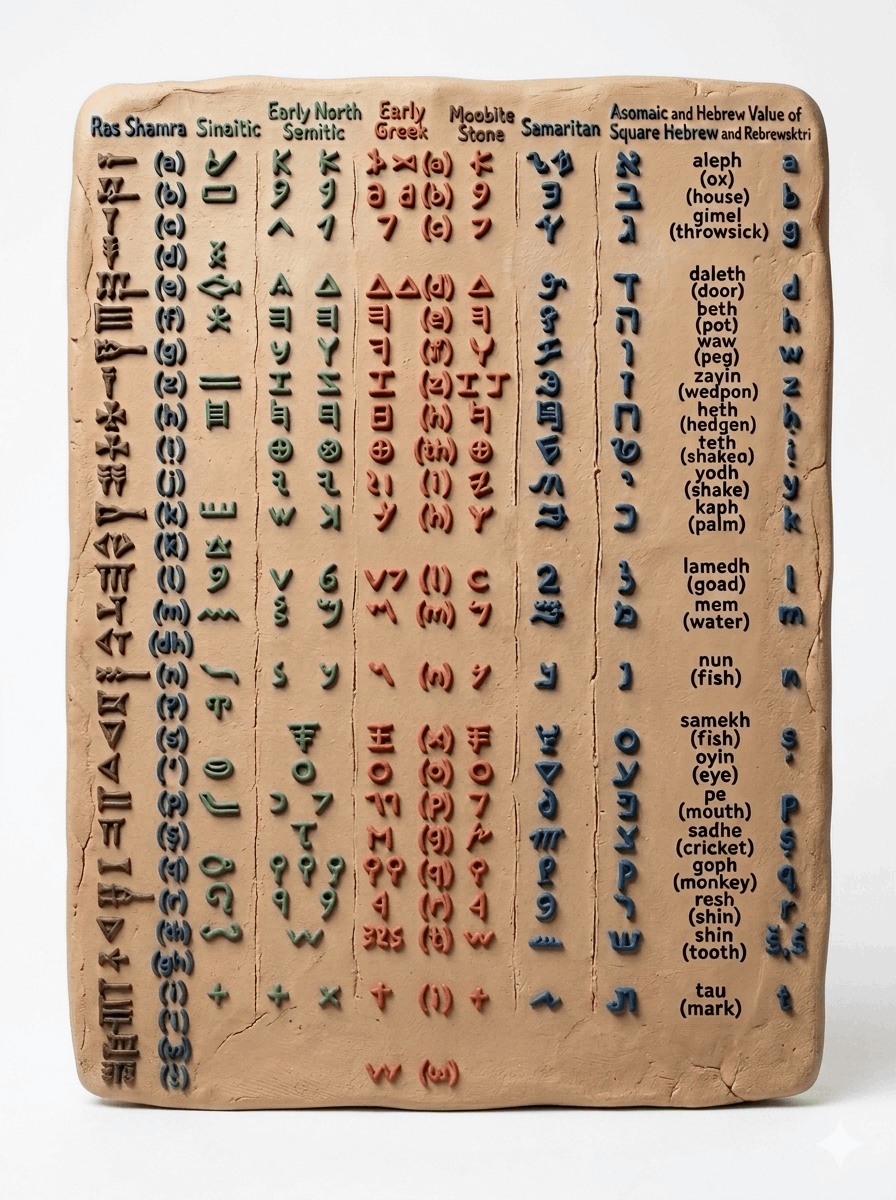
Originally, the Hebrew language was recorded utilizing the Paleo-Hebrew script. These distinct characters predate their "Aramaic" square-letter counterparts. The utility of Paleo-Hebrew gradually diminished as Aramaic rose to prominence, eventually becoming the dominant lingua franca of the region.

Hebrew and Aramaic in Antiquity

The Old Testament was predominantly composed in Hebrew, though approximately 1% of the text features Aramaic. Aramaic was native to the Arameans, a Semitic-speaking populace inhabiting Aram, a region spanning from modern-day Lebanon to the Euphrates River.

The language ascended to become the lingua franca (common language) of the ancient Near East under the administrative influence of the Neo-Assyrian Empire (911–605 B.C.). It retained this status until Koine Greek supplanted it following the military conquests of Alexander the Great in 333 B.C. This transition triggered the widespread Hellenization of Near Eastern cultures. Despite the shift toward Greek, Aramaic remained a spoken vernacular in Israel during the life of Jesus.

Occurrences of Aramaic in the Old Testament

Specific textual passages composed in Aramaic include:

Genesis 31:47
Jeremiah 10:11
Daniel 2:4b–7:28
Ezra 4:8–6:18, 7:12–26

The Transition to the Square Alphabet

Aramaic script ultimately replaced the original Paleo-Hebrew characters. This paleographical transition occurred following the destruction of the First Temple, likely during the Babylonian Exile when Jewish scribes were deeply immersed in Aramaic-speaking environments.

Semitic Languages

The Semitic language family, a major branch of the Afroasiatic macrofamily, is characterized by a deeply intertwined genetic relationship rooted in a shared ancestral tongue known as Proto-Semitic. Arising in the ancient Near East, these languages evolved through a process of geographic dispersion and cultural divergence, splitting into distinct West and East Semitic branches. East Semitic is prominently represented by Akkadian, the ancient extinct cuneiform-based language of Mesopotamia. The highly diverse West Semitic branch further fractured into Modern South Arabian, Ethiopian Semitic (such as Amharic), and Central Semitic. Central Semitic encompasses the Northwest Semitic dialect continuum—including Hebrew, Phoenician, Ugaritic, and Aramaic—as well as Arabic. Despite millennia of separation, Semitic languages retain a remarkably cohesive core architecture, most famously illustrated by their shared morphosyntactic systems based on triconsonantal (three-letter) roots.

The historical trajectory of these languages is defined by successive waves of linguistic dominance that mirrored the rise and fall of regional empires. In antiquity, Northwest Semitic dialects like Phoenician pioneered early alphabetic writing systems, which were subsequently adapted by neighboring cultures. Aramaic, favored by imperial administrations like the Neo-Assyrian and Persian Empires, achieved unparalleled status as the regional lingua franca (common tongue), eventually supplanting Paleo-Hebrew script and becoming the vernacular (everyday speech) of the second-temple period (516 B.C. to A.D. 70). By the seventh century A.D., the geopolitical landscape shifted radically with the Islamic conquests, driving the rapid expansion of Arabic across North Africa and the Middle East. This expansion marginalized many indigenous Semitic vernaculars, turning Arabic into the most widely spoken Semitic language today, while ancient tongues like Hebrew and Aramaic survived primarily through liturgical continuity and insular speech communities.

Ancient Alphabets

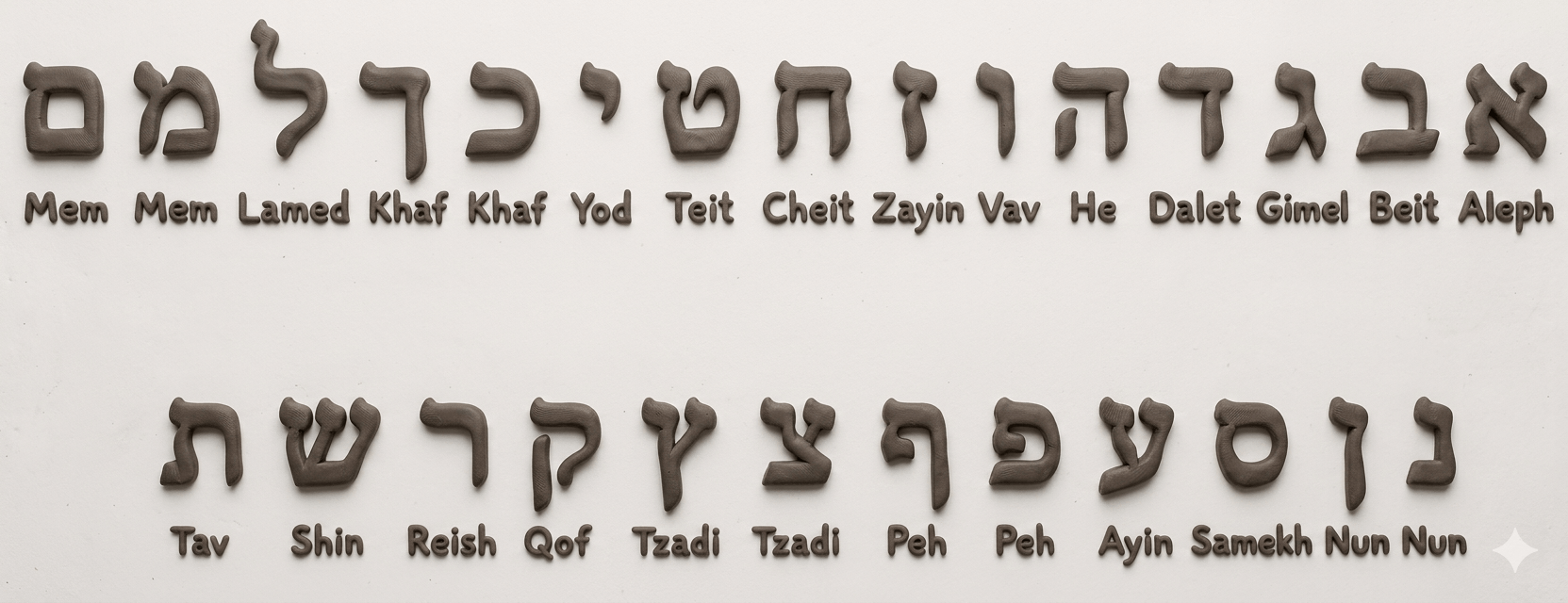
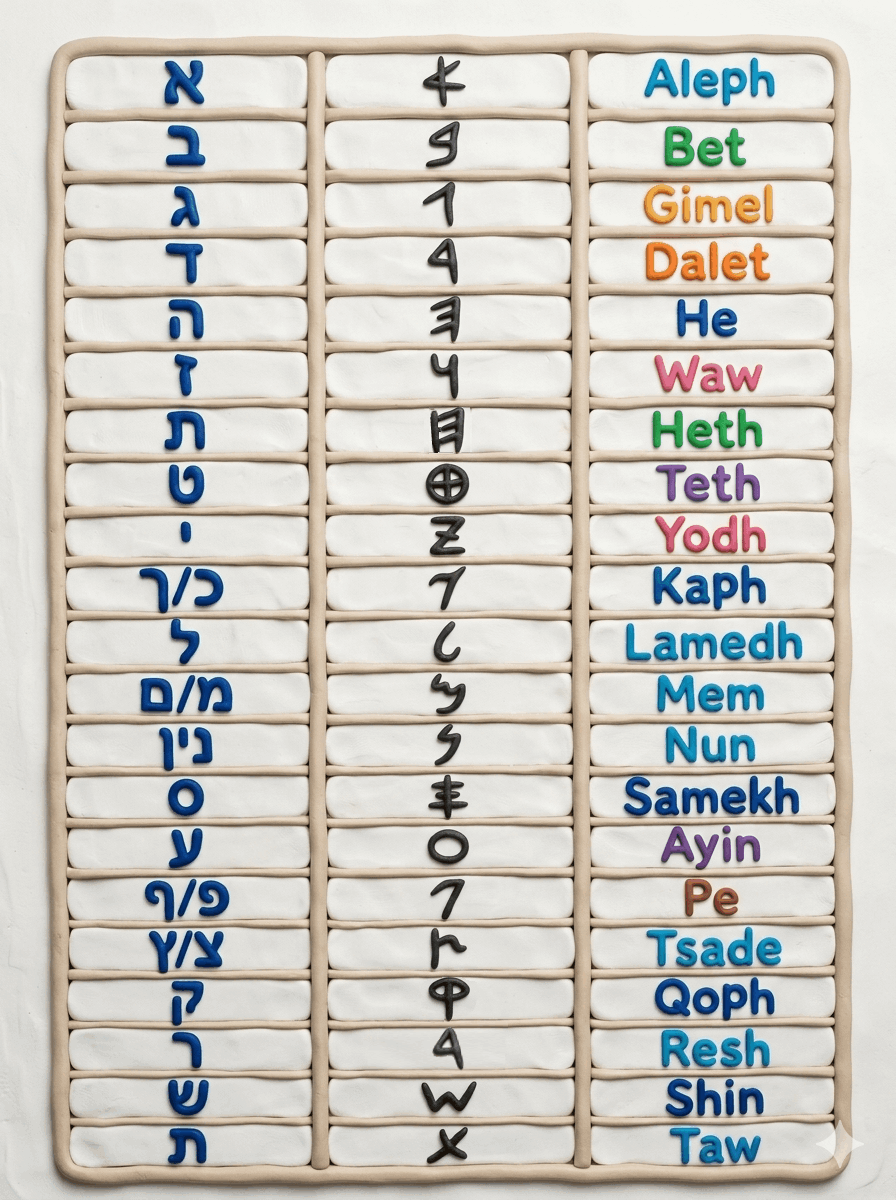
Hebrew Alphabet (Aramaic Characters)

Aramaic characters replaced the paleo Hebrew characters. This change would occur after the destruction of the first temple, and probably during the time of the exile. 

Hebrew is written from 'right to left.'

hebrew characters

Hebrew Alphabet (Paleo-Hebrew Characters)

The Paleo-Hebrew characters are shown in the middle column with the Aramaic characters in the left column. 

paleo hebrew characters

Written Old Testament Manuscripts

300 B.C. - A.D. 50 (circa 150 B.C.)
Dead Sea Scrolls

Various Old Testament texts

150-100 B.C.
Nash Papyrus

Exodus 20:2–17, Deuteronomy 5:6–21

A.D. 820-850
British Museum Oriental 4445

Pentateuch

A.D. 895
Codex Cairensis

Former & latter prophets

A.D. 900
Aleppo Codex

Old Testament

A.D. 916
Leningrad MS (Heb B 3)

Latter Prophets

A.D. 1010
Leningrad Codex B-19A

Old Testament

A.D. 1204
Torah Finchasiye (Samaritan triglot from Nablus)

Pentateuch

~A.D. 1250
Damascus Pentateuch

Entire Old Testament (some loss)

Printed Editions

A.D. 1477
Bologna Edition of Psalter

Psalms

A.D. 1488
Soncino Edition of Old Testament

Entire Old Testament

A.D. 1525/26
Second Bomberg Edition

Entire Old Testament

Translations

unknown (400 B.C -100 B.C.)
Samaritan Pentateuch (Samaritan)

Pentateuch

250-150 B.C.
Septuagint (Greek)

Torah (initially)

A.D. 100-200
Peshitta Syriac Old Testament (Syriac)

Entire Old Testament


A.D. 130
Aquila's Version (Greek)

Fragments

A.D. 170
Symmachus' Version (Greek)

Entire Old Testament

A.D. 180-190
Aquila's Theodotion's Version (Greek)

Entire Old Testament

A.D. 200
Targum of Onkelos (Aramaic)

Torah

A.D. 200
Old Latin, Italia version (Latin)

Fragments

A.D. 300
Targum of Jonathan ben Uzziel (Aramaic)

Joshua to Kings, Isaiah to Malachi

A.D. 390-404
Jerome's Vulgate (Latin)

Entire Old Testament

A.D. 450
Wurzburg Palimpsest Codex (Latin)

Torah, Prophets

A.D. 616
Syriac Hexapla (Syriac)

Entire Old Testament

A.D. 650
Targum of Pseudo-Jonathan (Aramaic)

Torah

A.D. 650
Lyons Codex (Latin)

Genesis to Judges

A.D. 700 
Jerusalem Targum (Aramaic)

Torah

ketef hinnom

Ketef Hinnom Scroll

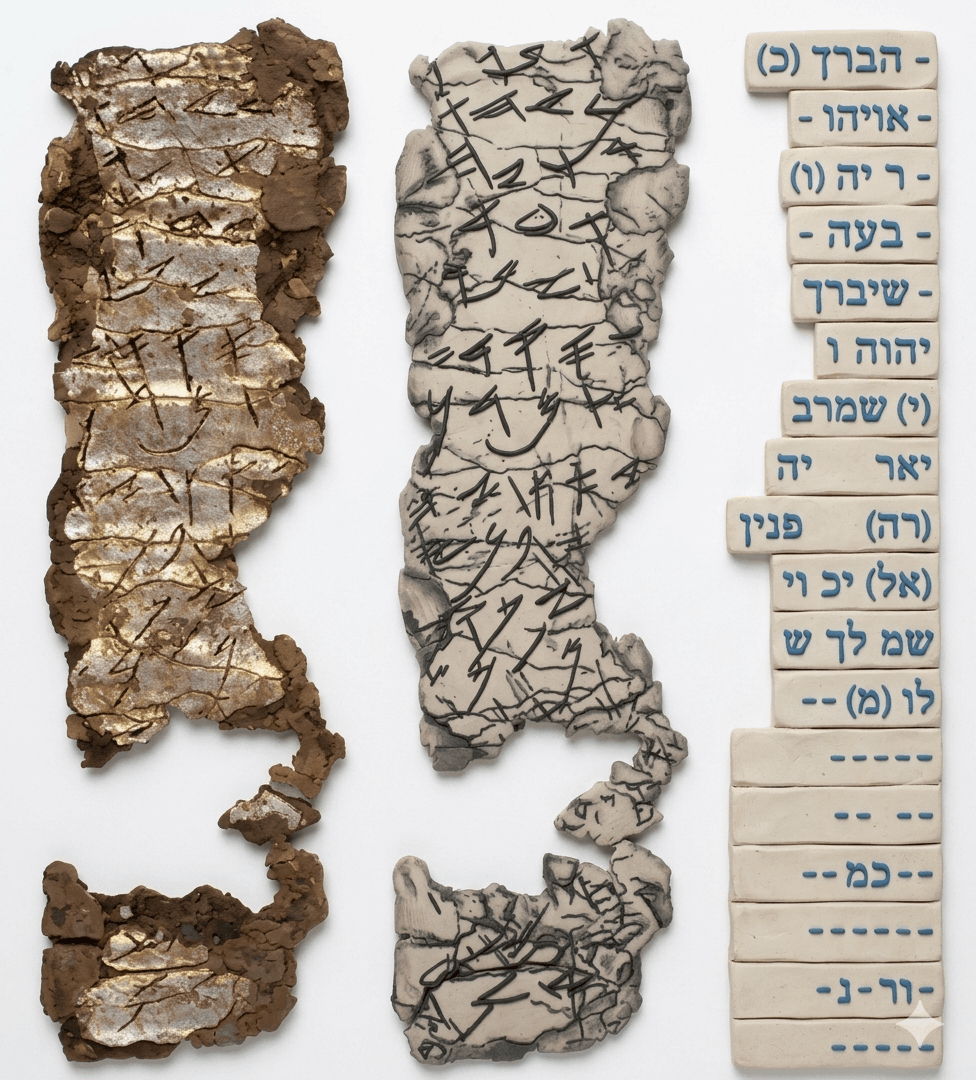
Discovered within the environs of Jerusalem, the Ketef Hinnom artifact consists of a diminutive silver scroll dating back to the First Temple period—an era that concluded precipitously with the Babylonian destruction of the initial Israelite temple in 586 B.C.

Remarkably, this meticulously crafted scroll preserves the sacred priestly benediction articulated in Numbers 6:24-26. The text is inscribed in the ancient paleo-Hebrew script, a localized alphabetic system utilized prior to the Babylonian exile, after which the Jewish community extensively adopted Aramaic characters. Epigraphic and archaeological analyses place the creation of this artifact at approximately 600 B.C., rendering it one of the oldest surviving fragments of a biblical text.

Ketef Hinnom

 The Ketef Hinnom scrolls

Discovered in 1979 within a ancient burial chamber, the Ketef Hinnom scrolls consist of two tiny silver artifacts that are now recognized as the oldest surviving texts from the Hebrew Bible, dating back to approximately 700 B.C. Inscribed with portions of the well-known Priestly Blessing from the Book of Numbers, these delicate objects were apparently once utilized by their owners as protective amulets. Because of their incredibly fragile state, scholars had to spend three painstaking years developing a specialized preservation method to safely unroll the silver sheets without causing them to disintegrate.

(4.3 minutes)

isaiah scroll

Dead Sea Scrolls - Isaiah Scroll

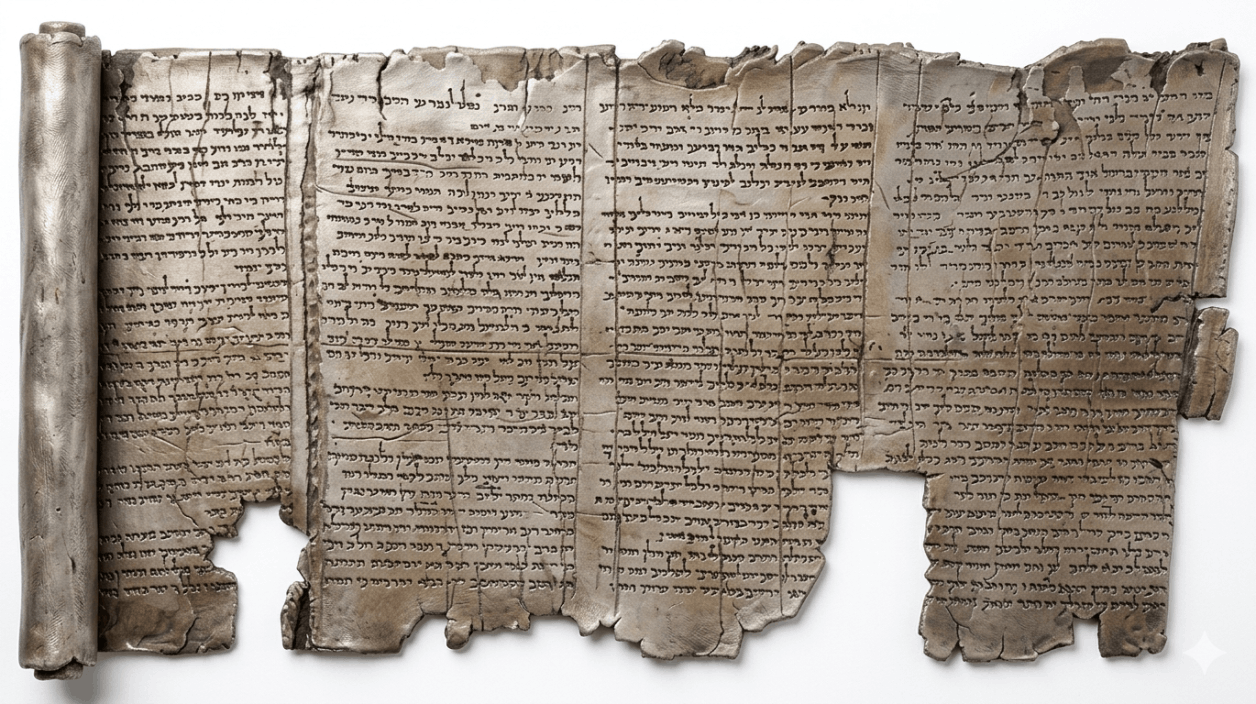
The discovery of the Dead Sea Scrolls stands as a monumental milestone for modern biblical scholarship, profoundly deepening our understanding of the transmission and preservation of the Hebrew Scriptures. Unearthed in the mid-20th century near the Dead Sea, these ancient manuscripts provided historians and theologians with an unprecedented window into textual history. Prior to this discovery, the earliest available copies of the Hebrew Bible were centuries younger, leaving open questions about how accurately the text had been preserved through generations of manual copying.

A premier example of this extraordinary preservation is the Great Isaiah Scroll, which is paleographically dated to approximately 150 B.C. When scholars meticulously compared this ancient text to the Masoretic version handed down through the centuries, they discovered a stunning degree of textual fidelity. The two versions match almost perfectly; the only deviations consist of minor variations, which are typically confined to archaic spelling differences or grammatical nuances. This remarkable consistency underscores the meticulous precision of ancient scribes and confirms that the book of Isaiah remained virtually unaltered over more than a millennium

Great Isaiah Scroll

Book Minute: The Great Isaiah Scroll

The Great Isaiah Scroll is the most famous of the seven "original" Dead Sea Scrolls discovered in the Qumran caves in 1947, a discovery widely hailed as one of the greatest archaeological finds of the modern era. As a monumental 2,000-year-old manuscript, it contains over 25 percent of all the biblical text found among the scrolls, with nearly every part of its 66 chapters remaining completely intact. Due to its exceptionally fragile condition, the scroll must be securely preserved under lock and key inside a temperature-controlled underground vault in Jerusalem. Because of these strict preservation needs, it remained hidden away for over 40 years until it was finally put on public display in 2008 for a brief period of just a few months, and then again in 2026.

(1 minute)

"With the discovery of the Dead Sea Scrolls, scholars have Hebrew manuscripts one thousand years earlier than the great Masoretic Text manuscripts, enabling them to check on the fidelity of the Hebrew text. The result of comparative studies reveals that this is a word-for-word identity in more than 95 percent of the cases, and the 5 percent variation consists mostly of slips of the pen and spelling. To be specific, the Isaiah scroll (1Q Isa) from Qumran led the Revised Standard Version translators to make only thirteen changes from the Masoretic text; eight of those were known from ancient versions, and few of them were significant. More specifically, of the 166 Hebrew words in Isaiah 53 only seventeen Hebrew letters in 1Q Isb differ from the Masoretic Text. Ten letters are a matter of spelling, four are stylistic changes, and the other three compose the word for "light" (add in v.11), which does not affect the meaning greatly. Furthermore that word is also found in that verse in the LXX and 1Q Isa."

Geisler and Nix, A General Introduction to the Bible, Moody, 1986, pg. 382.

Masoretic Text

Originating from the Hebrew word masoreth, meaning “tradition,” the Masoretic text represents the meticulously assembled and codified traditional text of the Jewish Bible. This monumental scholarly endeavor began around the 6th century A.D. and reached completion in the 10th century, spearheaded by dedicated groups of Jewish scholars known as Masoretes. Working diligently within Talmudic academies across Babylonia and Palestine, these individuals labored under a singular, profound mission: to reproduce and preserve, as accurately and faithfully as possible, the pristine and original text of the Hebrew scriptures for successive generations.

To achieve this goal without altering the sacred consonantal text handed down to them, the Masoretes pioneered a sophisticated system of diacritical markings. They invented vowel pointings and cantillation marks that were intricately placed around the existing alphabetical characters, serving as a phonetic guide to guarantee correct pronunciation and liturgical chanting. By introducing these external markers rather than modifying the core text itself, the Masoretes successfully standardized the reading of the scriptures, thereby eliminating ambiguity while strictly maintaining the physical integrity of the ancient writings.

The extraordinary precision of the Masoretes extended well beyond phonetic standardization into an exhaustive system of textual quality control. Upon completing the final codification of each biblical section, they painstakingly counted and recorded the exact number of verses, words, and individual letters, even going so far as to identify the precise verse, word, and letter that marked the absolute center of the text. This rigorous statistical auditing ensured that any future scribal emendation, omission, or addition could be immediately detected, a level of care that is directly credited for the remarkable consistency found in Hebrew Old Testament manuscripts down through the centuries.

leningrad

Leningrad Codex

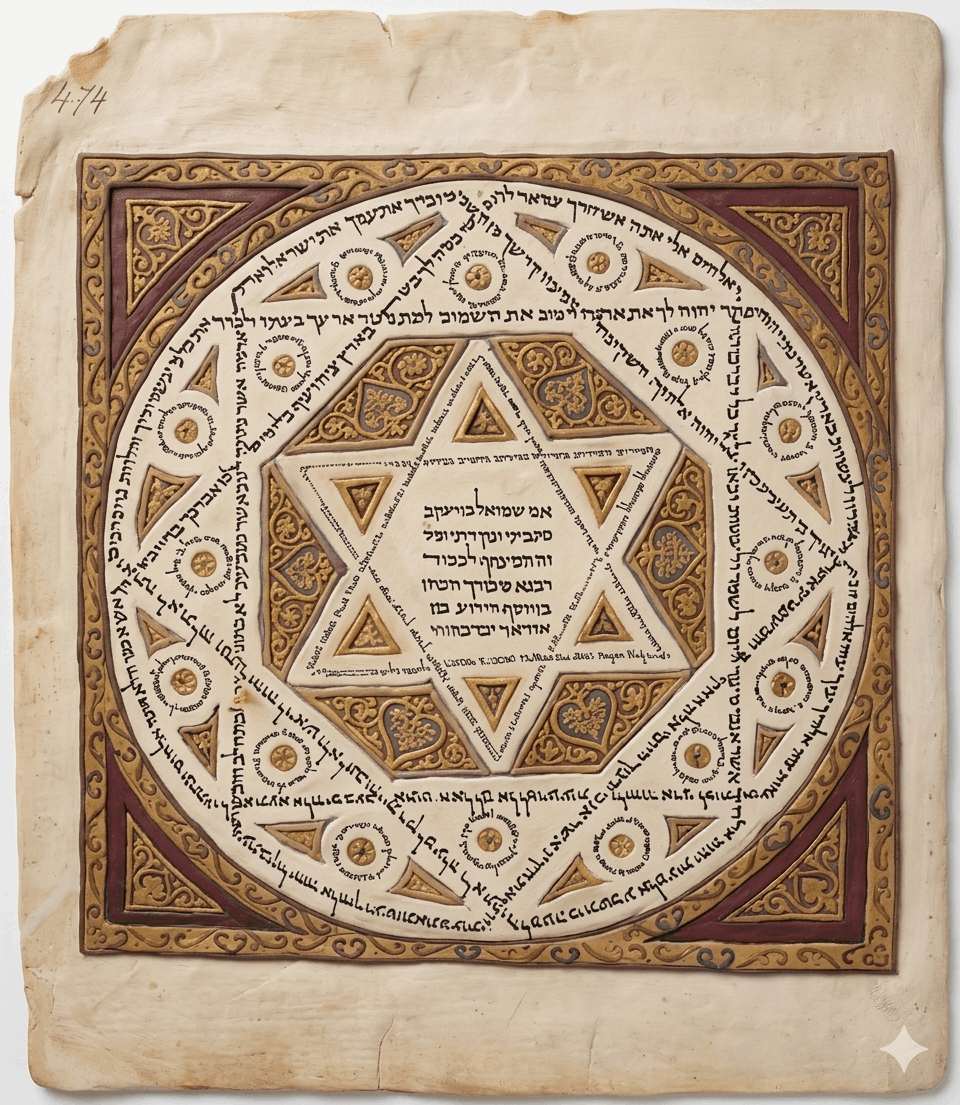
The Leningrad Codex stands as a monumental artifact in textual scholarship, recognized as the oldest extant complete manuscript of the Hebrew Scriptures, or Tanakh. Written in A.D. 1008, this invaluable codex serves as a primary, fully preserved witness to the Masoretic tradition, providing modern researchers with an essential baseline for analyzing the historical transmission and linguistic preservation of biblical texts.

publican

Transmission & Textual Criticism

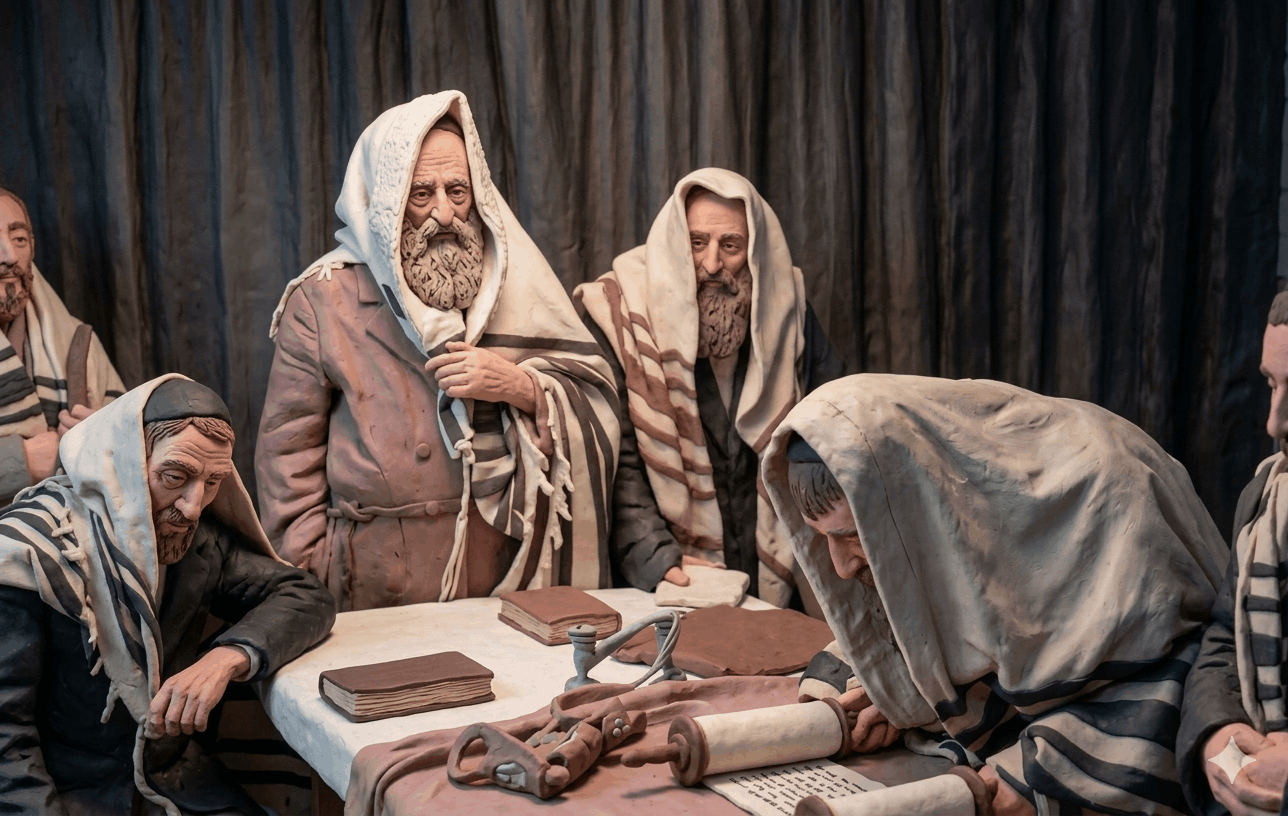
In stark contrast to the modern era of instantaneous digital communication and mass-produced office supplies, historical literary production was an entirely artisanal, labor-intensive endeavor. Ancient and medieval societies completely lacked convenience tools such as standardized notebooks, pencils, erasers, typewriters, and copy machines; instead, every stage of the writing process was performed intricately by hand. This specialized landscape was dominated by highly trained scribes who operated within dedicated monastic workshops known as scriptoriums, effectively controlling the replication and consumption of written knowledge. Rather than utilizing wood-pulp paper, these artisans primarily recorded texts on durable vellum—animal skins painstakingly prepared for writing—or occasionally on plant-based papyrus, using a rudimentary yet permanent ink formulated from lamp soot and bound with natural gums.


The making of Torah Scroll

A Torah scroll is meticulously handcrafted by a certified scribe called a sofer, following strict religious laws that have remained unchanged for a millennia. The scribe writes out all 304,805 Hebrew letters entirely by hand using a quill made from a bird feather, such as a turkey or goose, and a specially prepared permanent black ink. The text must be copied directly from an authentic source manuscript onto klaf—sheets of parchment prepared exclusively from the skin of a select animal, which are pre-etched with faint lines to ensure perfectly straight writing. If the scribe makes even a single error in writing the holy name of God, that entire section of parchment cannot be used. Once all the individual sheets of parchment are completed and verified for absolute accuracy, they are sewn together using thread made from animal sinews and attached to two ornate wooden rollers known as atzei chayim (trees of life).

(12.3 Minutes)


Textual Criticism

Textual criticism operates as both an art and a science, employing rigorous analytical methodologies to reconstruct and restore the original readings of historical literary works. This discipline is rendered essential by the inherent fallibility of human transmission over centuries. Unlike higher criticism, which analyzes the historical context, authorship, and literary content of a document, lower criticism—synonymous with textual criticism—focuses strictly on the physical text itself to isolate and correct transcription discrepancies.

Before the advent of modern printing presses, digital typography, or mass-produced media, the preservation of literature depended entirely on manual reproduction. Scribes frequently copied manuscripts by sight or by listening to a lector dictate the text aloud to a scriptorium. This highly manual, human process left texts acutely vulnerable to typographical risks, as visual fatigue and auditory misinterpretations introduced errors that were subsequently propagated through future generations of copies.

The preferred reading is one that…
Textual Critics evaluate the manuscript evidence to determine what is the original reading of scripture.

“Canons of Textual Criticism” from Gleason Archer’s Survey of Old Testament Introduction, pg. 64.
  1. Is older
  2. Is more difficult
  3. Is shorter
  4. Best explains variants
  5. Has the widest geographical support
  6. Conforms to the style and diction of the author
  7. Reflects no doctrinal bias
Errors in Manuscript Copying
Adapted from:
“Most common manuscript errors” from Gleason Archer’s Survey of Old Testament Introduction, pg. 60.

  • Haplography: The accidental omission of a letter or word that should have been repeated sequentially. (Judges 20:13, where "sons" is missing).
  • Dittography: The erroneous duplication of a letter, word, or phrase that should only appear once. (Ezekiel 16:6 in the Hebrew text).
  • Metathesis: The accidental transposition or swapping of adjacent letters or words within a text. (Psalm 49:11).
  • Fusion: The mistaken combination of two separate words, or parts of words, into a single word.
  • Fission: The erroneous division of a single word into two distinct words. (Hosea 6:5).
  • Homophony: The substitution of a word with a homonym that sounds identical but has a different meaning. (Psalm 100:3; compare NASB to NIV).
  • Misreading Similar Letters: The confusion and substitution of one character for another due to their similar graphic shapes. (Jeremiah 15:14).
  • Homoeoteleuton: The omission of an intervening text passage caused by the scribe's eye skipping between two identical word endings. (Judges 16:13–14).
  • Homoeoarkton: The omission of an intervening text passage caused by the scribe's eye skipping between two identical word beginnings.
  • Accidental Omission: The casual or inadvertent loss of a single word or letter during transcription.
  • Vowel Misreading: The misinterpretation of weak vowel letters, causing the scribe to transcribe them as consonants.
  • Vowel Point Variations: The misreading of weak vowels as consonants, or discrepancies in vowel points that alter a word's meaning.
  • Marginalia: The accidental integration of explanatory notes or corrections from the manuscript margin into the main body text. (Isaiah 38:21–22, cf. 2 Lings 20:7-8, Joshua 2:15 & LXX)

Conclusion

"The thousand of Hebrew Manuscripts, with their confirmation by the LXX and the Samaritan Pentateuch, and the numerous other crosschecks from outside and inside the text provide overwhelming support for the reliability of the Old Testament. Hence, it is appropriate to conclude with Sir Frederic Kenyon's statement, 'The Christian can take the whole Bible in his hand and say without fear or hesitation that he holds in it the true word of God, handed down without essential loss from generation to generation throughout the centuries.'"

Geisler and Nix, A General Introduction to the Bible, Moody, 1986, pg. 382.

sand